
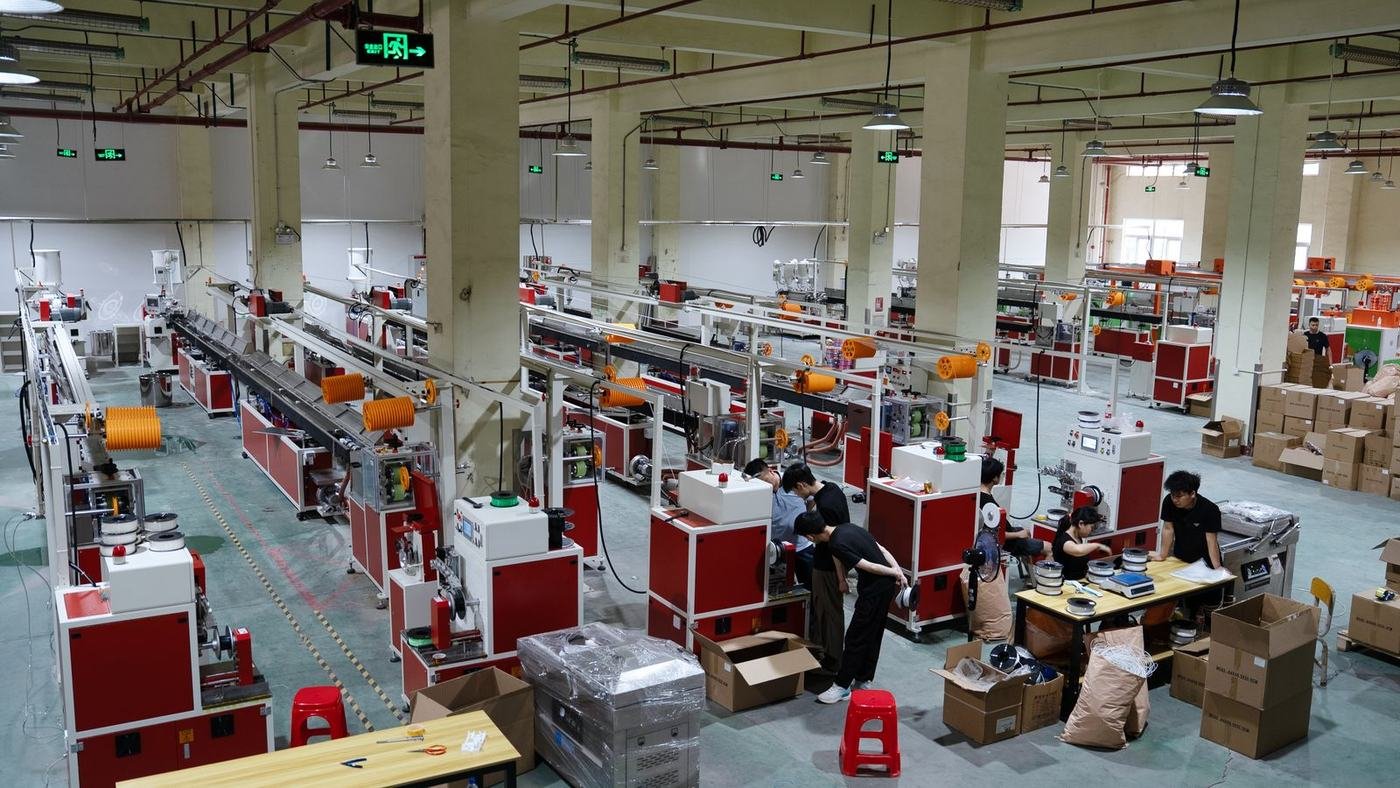
Mexico's manufacturing base — automotive, appliances, aerospace components and electronics — has expanded quickly as supply chains shortened toward North America. 3D printing has followed, both as a prototyping tool inside those plants and as a service industry supplying them.
Where the demand comes from
- Automotive tier suppliers around Monterrey, Querétaro, Puebla and Guanajuato — jigs, fixtures, end-of-arm tooling.
- Contract manufacturers producing for US brands — fast iteration on packaging and housings.
- Service bureaus in Mexico City, Guadalajara and Monterrey selling print capacity locally.
- Education — engineering faculties building additive labs.
Material mix
| Application | Typical material | Why |
|---|---|---|
| Jigs & fixtures | PETG, ABS | Tough, cheap, dimensionally stable enough for shop-floor use |
| Tooling & brackets | PA-CF, PC | Stiffness and heat resistance where metal is overkill |
| Outdoor / engine bay | ASA | UV and heat stability |
| Visual prototypes | PLA, silk & matte finishes | Fast, cheap, presentable |
Import basics
Mexico applies its own tariff schedule and VAT (IVA). Imports are typically handled through a customs broker (agente aduanal), and the documentation set is similar to the US: commercial invoice, packing list, bill of lading, classification and origin. Under USMCA, North American origin can attract preferential treatment; Asian-origin goods do not. Check the current rate and any sector program with your broker — Mexican trade policy has been adjusted several times recently.
Practical sourcing notes
- Lead time matters more than the last 3% of price — a plant that stops for a week waiting on filament loses far more than the per-kg difference.
- Heat and humidity are real storage issues in coastal and southern states; sealed bags with desiccant and a documented drying recommendation are part of the product.
- Spanish documentation — TDS and SDS in Spanish reduce friction with plant EHS teams.
- Local stock — many buyers want a Mexican warehouse buffer for urgent restock, which argues for a distributor model rather than pure direct import.
VOXFIL works with importers and distributors on container and distributor programs, provides TDS/SDS per grade and can supply Spanish-language documentation on request.
Frequently asked questions
Does USMCA make Chinese filament cheaper to import into Mexico?
No. Preferential treatment depends on origin. Chinese-origin filament does not qualify for USMCA preference, so the applicable Mexican tariff treatment applies. Confirm the current rate with an agente aduanal.
What filament do Mexican manufacturers buy most?
PETG and ABS for jigs, fixtures and shop-floor parts; PA-CF and PC where stiffness and heat resistance are needed; ASA for outdoor and under-hood applications.
Should I hold stock in Mexico?
If you sell to plants with line-down risk, yes. A local buffer of the top two or three SKUs prevents a stockout from becoming a production stoppage, and the rest can be imported on a container cycle.