
Wet filament does not announce itself. It prints slightly worse, slightly weaker, with a little more stringing — until a long print fails at hour nine. The cost is real but scattered, which is why it is usually ignored.
Quantifying the cost
A workable estimate for a print farm:
- Failed-print rate attributable to moisture: typically 3–8% on hygroscopic grades.
- Average part value including machine time.
- Operator time to diagnose, remove and restart.
If a farm runs 200 kg a month on nylon and PETG with a 5% moisture-linked failure rate, the loss is around 10 kg of material plus the machine hours and labor attached to those failures. Against that, a dryer and a sealed storage routine is cheap.
Which grades care
| Grade | Moisture sensitivity | Practical routine |
|---|---|---|
| PA (nylon), PA-CF | High | Dry before every print; store sealed with desiccant |
| PC | High | Dry before use; do not leave on the machine overnight |
| TPU | Moderate–high | Dry after opening if storage has been humid |
| PETG | Moderate | Dry if stringing or bubbles appear |
| PLA, ABS, ASA | Low | Keep sealed; drying rarely needed |
Building a routine that survives a busy week
- Dry on a schedule, not on suspicion. Post the temperatures and times on the wall and treat them as part of setup.
- Store sealed with desiccant, and replace desiccant on a cycle rather than when it looks tired.
- Print from a dry box on long jobs — especially nylon, where a multi-hour print can absorb moisture mid-run.
- Track failures by material. Two weeks of data tells you which grade is actually costing you.
Specifying packaging that protects the product
When you buy in bulk, packaging is part of the specification. Ask for:
- Vacuum sealing with desiccant
- A stated moisture limit at packing for hygroscopic grades
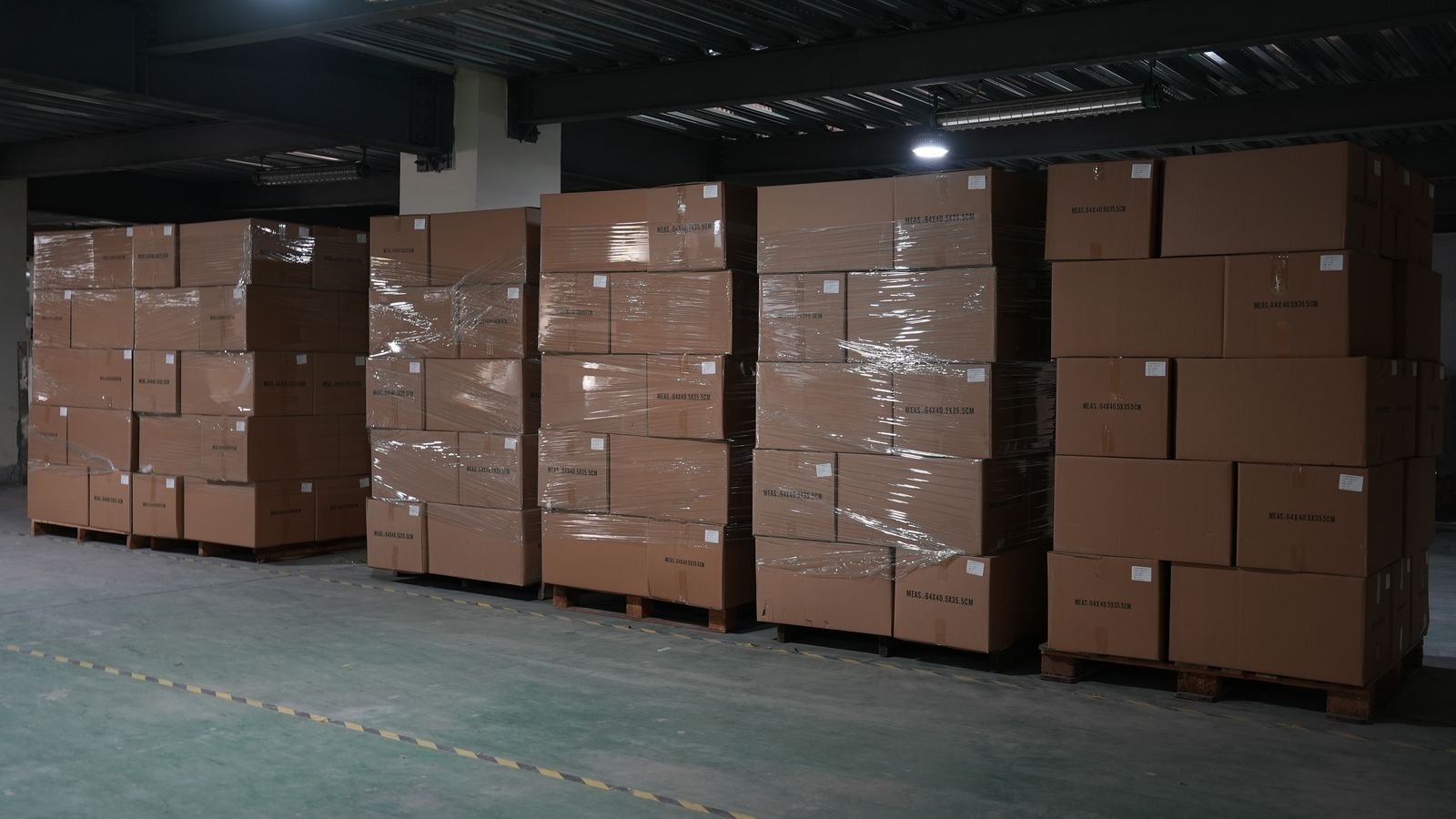
- Cartons that survive humid transit and warehouse stacking
- Reasonable shelf life guidance for the grade
VOXFIL vacuum-seals hygroscopic grades with desiccant, states moisture control at packing, and supplies TDS/SDS with the drying recommendation for each grade. Ask for the current specification per material via contact.
Frequently asked questions
How much does wet filament actually cost a print farm?
Estimate it as (monthly kilograms × moisture-linked failure rate × cost per failed part including machine time and labor). A 3–8% failure rate on hygroscopic grades is a realistic starting range to model.
Which filament grades need drying?
Nylon (PA and PA-CF) and polycarbonate are the most sensitive and should be dried before printing. TPU and PETG benefit when stringing or bubbles appear. PLA, ABS and ASA are comparatively forgiving.
What packaging should I ask for on bulk filament?
Vacuum sealing with desiccant, a stated moisture limit at packing for hygroscopic grades, and cartons robust enough for humid transit and stacking. For nylon and PC this is a specification item, not an optional extra.