
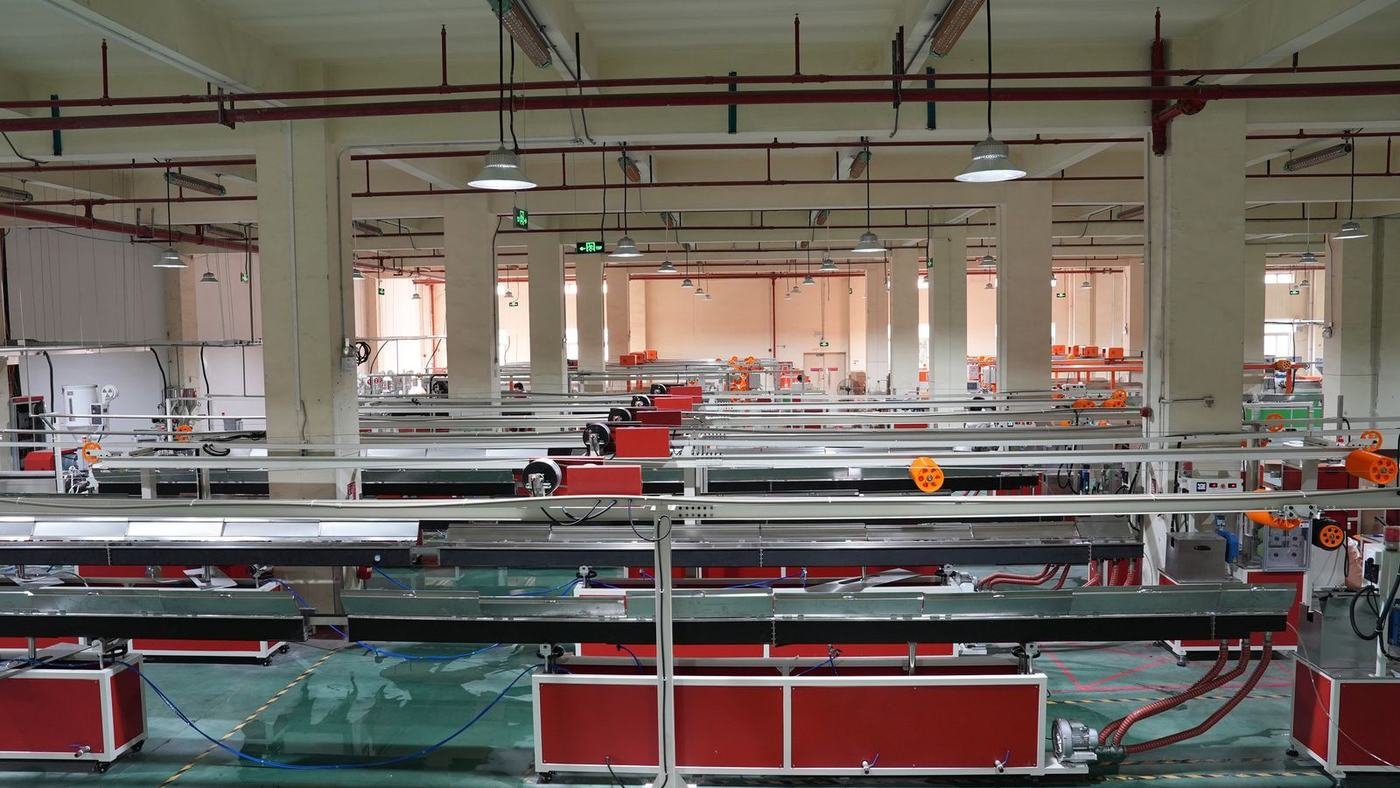
Germany is Europe's largest industrial market and one of the most exacting filament markets in the world. Buyers here rarely choose on price alone; they choose on documented consistency, delivery reliability and the ability to answer a technical question in writing.
Who buys
- Industrial suppliers and machine builders — jigs, fixtures, grippers, replacement parts.
- Mittelstand manufacturers — small and mid-size firms with real engineering discipline and long supplier relationships.
- Research institutes and universities — grant-funded, specification-driven purchases.
- Print service providers — competing on repeatability and turnaround.
What they check first
| Check | Why it decides the order |
|---|---|
| TDS with test methods | A number without a method is not a specification; German buyers read the method column |
| Dimensional data | Measured distribution and sampling rate, not a single tolerance figure |
| Batch traceability | Can a spool be traced to a lot, a machine and a test report? |
| Delivery reliability | A missed delivery stops production; buyers track on-time performance |
| Documentation language | German documentation shortens internal approval |
| Packaging | Recyclable spools and clean cartons matter for waste audits |
How to write the specification
A workable German-market specification typically states: polymer family and grade; color reference; diameter and tolerance with method; net weight and spool type; packaging and pallet pattern; documentation list; batch color limit; and the remedy for non-conforming goods. Put the remedy in writing — German buyers expect a defined process, not a promise.
Practical print and application notes
- PA-CF and PC for tooling where stiffness and heat resistance replace machined metal.
- PETG for chemical-resistant fixtures and fluid handling.
- ASA for outdoor and UV-exposed parts.
- PLA for visual and low-load prototypes where speed beats durability.
Delivery and terms
Most German buyers prefer DDP or DAP with a clear delivery window and a named contact. Payment terms commonly start at deposit-against-documents and move to open account after a track record. Lead time should be defined by its starting event — for example, "10 working days from approved color sample and deposit" — rather than a vague promise.
VOXFIL works with German importers and OEMs on staged programs: sample validation, then pallet or LCL, then container. See wholesale terms and the Trust Center for the document set.
Frequently asked questions
What documentation do German filament buyers expect?
A TDS with test methods, dimensional data with sampling detail, batch traceability, RoHS/REACH declarations, a dated declaration of conformity, and usually German-language documentation. SDS per grade is expected for handling and storage.
Is price or reliability more important in Germany?
Reliability. A production stoppage costs far more than a small per-kilogram difference, so buyers weight on-time delivery and documented consistency above the lowest quote.
Which filament grades sell best in Germany?
PETG and ABS for fixtures and shop-floor parts, PA-CF and PC for tooling and technical parts, ASA for outdoor use, and PLA for visual prototypes and education.